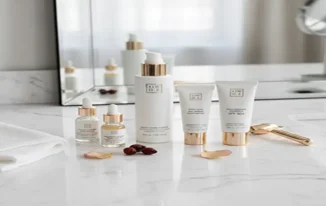
Your skin feels tight, almost like it’s a size too small. A splash of lukewarm water stings, your favorite gentle moisturizer vanishes into a dry desert of a face within minutes, and no amount of highlighter can fake the radiance you used to have. If your complexion looks flaky, feels perpetually irritated, or reacts to products that used to be your holy grail, you aren’t just dealing with dry skin—you are likely dealing with a compromised skin barrier.
Think of your outermost layer of skin, the stratum corneum, as a brick-and-mortar wall. Your skin cells are the bricks, and the lipids—made up of ceramides, cholesterol, and fatty acids—are the mortar holding everything together. When that mortar chips away due to over-exfoliation, harsh weather, or aggressive ingredients, moisture leaks out, and irritants march right in.
The good news? The skin is remarkably resilient. When you stop breaking it down and start feeding it what it actually needs, the reward isn’t just comfort—it is that coveted, bouncy, ultra-plump, dewy glow from within. Here is your definitive guide to rebuilding your skin barrier and transforming your texture.
The Culprits: How We Accidentally Ruin Our Barrier
We rarely destroy our skin barrier overnight through a single misstep; it is usually death by a thousand active ingredients. Modern skincare culture pushes us toward more, faster, and stronger, but the skin begs to differ.
- Over-Exfoliation: Piling on glycolic, lactic, or salicylic acids daily—or combining chemical peels with physical scrubs—strips away the protective lipid matrix faster than your skin can synthesize it.
- Aggressive Retinoid Overuse: Retinol and tretinoin are gold standards for aging and acne, but ramping up the frequency or strength too quickly leads to “retinoid dermatitis,” leaving skin raw and peeling.
- High-pH Foaming Cleansers: If your face feels “squeaky clean” after washing, your cleanser has stripped your skin’s natural acidic mantle (pH ~5.5), disrupting the enzymes needed to repair your barrier.
- Skipping Sun Protection: UV radiation degrades the structural proteins and lipids in your skin, impairing its ability to heal and retain moisture.
Red Flags: Signs Your Skin is Begging for Help
How do you know it is a barrier issue and not just standard seasonal dryness? Look for these distinct warning signs:
- Chronic Dehydration: Your skin drinks up products instantly and feels dry again an hour later, no matter how rich the cream is.
- Stinging and Burning: Applying basic, previously tolerated products—even plain aloe or simple hyaluronic acid—causes an uncomfortable hot sensation.
- Sudden Sensitivity or Breakouts: A compromised barrier lets bacteria and irritants penetrate deeply, leading to unexplained inflammation or micro-breakouts.
- Rough, Flaky Texture: The surface loses its smooth reflection, resulting in a dull, crepey, or uneven appearance.
The Blueprint: Your 4-Step Recovery Plan
Healing a broken barrier requires a complete shift in mindset. Put away the performance ingredients and embrace total skin minimalism.
Step 1: Strip Back to Skinimalism
Stop all active ingredients immediately. This means zero AHAs, BHAs, retinoids, vitamin C serums, or facial scrubs. For the next two to four weeks, your routine should consist of only three things: a gentle cleanser, a barrier-repair moisturizer, and a sunscreen.
Step 2: Gentle Cleansing Only Once a Day
Switch to a non-foaming, milky, or cream-based cleanser with a skin-neutral pH. Wash your face with lukewarm—never hot—water. If your skin is extremely fragile, consider skipping your morning cleanse entirely and just splashing with cool water.
Step 3: The Holy Trinity of Barrier Ingredients
Look for moisturizers specifically formulated to replicate your skin’s natural lipid profile. Seek out:
- Ceramides (1, 3, and 6-II): The chief architects of your lipid matrix.
- Cholesterol and Fatty Acids: These work synergistically with ceramides to fill the gaps in the mortar.
- Humectants (Glycerin and Hyaluronic Acid): These pull water into the skin, but you must trap them under a rich cream so they don’t evaporate out of a damaged barrier.
Step 4: Seal and Protect
At night, apply a generous layer of your barrier cream. If your skin is severely stripped, you can “slug” by applying a thin layer of petrolatum-based ointment over your moisturizer to lock everything in. During the day, finish with a gentle, hydrating mineral or chemical sunscreen that does not trigger stinging.
The Healing Timeline: What to Expect
Recovery isn’t instantaneous, but the milestones are deeply satisfying.
- Days 1 to 7: The burning and acute stinging should subside. Flakiness will start to soften, though your skin may still look a bit dull as the surface cells shed normally.
- Days 8 to 14: Tightness disappears. You will notice your skin starts holding onto moisture throughout the day, looking calmer and more uniform in tone.
- Days 15 to 30: The bounce returns. Without micro-inflammation disrupting light reflection, your complexion takes on that plump, dewy, glass-like texture.
Maintaining the Glow: Long-Term Habits
Once your barrier is restored, resist the urge to dive headfirst back into aggressive routines. Reintroduce actives one at a time, starting with just twice a week, and buffer them with your moisturizer. Prioritize consistency, listen to how your skin feels over what trends dictate, and remember: a healthy, resilient barrier will always outperform an overworked one.