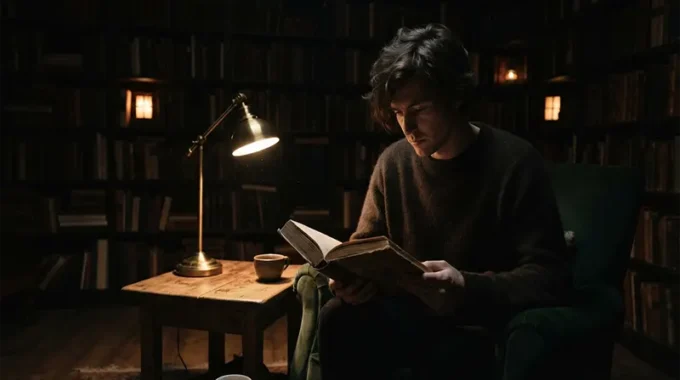
There is a distinct, almost sacred alchemy that occurs when the world outside grows inky and cold, and the interior world contracts to the warm, amber radius of a single bedside lamp. In an era dominated by the glaring blue light of screens and the relentless hum of perpetual connectivity, retreating to a dimly lit room with a physical book is not merely an act of reading—it is a sensory sanctuary. It is an embrace of the moody aesthetic, where shadows lengthen, rain taps a rhythmic percussion against the windowpane, and time itself seems to slow down.
This environment is defined not by stark illumination, but by intentional shadow. The moody reading aesthetic rejects the harsh overhead glare in favor of pools of warm light cast by a vintage ceramic lamp or the flickering dance of a beeswax candle. It is a visual and emotional landscape built on deep jewel tones, worn leather, heavy wool blankets tossed carelessly over an armchair, and the rich, comforting scent of aging paper mingling with faint tea leaves. Here, reading becomes an immersive ritual, a deliberate withdrawal from the loud exterior noise into the quiet topography of an imagined world.
The Architecture of a Cozy, Dimly Lit Space
Creating the ultimate reading nook is less about interior design perfection and more about curating atmosphere. Every element in a moody, dimly lit room serves a psychological purpose, signaling to the nervous system that it is safe to unwind, focus, and absorb.
- Layered, Low-Intensity Lighting: The centerpiece of the aesthetic is the absence of bright light. A single shaded table lamp with a low-wattage, warm-toned bulb provides just enough illumination to trace the lines of text without shattering the enveloping dusk of the room.
- Tactile Textures and Warmth: Heavy upholstery, velvet cushions, and a chunky knit wool or plaid blanket draped over a deep-seated armchair create a physical cocoon. The contrast between the cool air outside and the warm, heavy textiles inside heightens the coziness.
- Surrounding Literature: Floor-to-ceiling bookshelves filled with dense, colorful spines act as natural sound-dampeners and visual anchors, wrapping the reader in the tangible history of stories already told.
- Companion Elements: A steaming ceramic mug of spiced tea or dark coffee resting on a rustic wooden side table, accompanied perhaps by a sleepy cat curled on an ottoman, grounds the scene in a tranquil, domestic reality.
The Psychology of the Dimly Lit Escape
Why are we so deeply drawn to this atmospheric aesthetic? There is a profound psychological shift that happens in dim light. When our visual field narrows and the periphery fades into shadow, our mental bandwidth follows suit. The scattered anxieties of the day, which thrive in bright, open spaces, recede into the corners of the room.
Reading in a dimly lit, cozy space forces a hyper-focus. Without visual distractions, the imagination works at full capacity. The words on the page stop being symbols and transform into cinematic imagery. The shadows in the room do not feel menacing; instead, they act as boundaries protecting the quiet theatre of the mind. It is a modern form of sanctuary-building—a physical manifestation of carving out sacred time for introspection, where the darkness outside enhances the illumination found within a good book.